


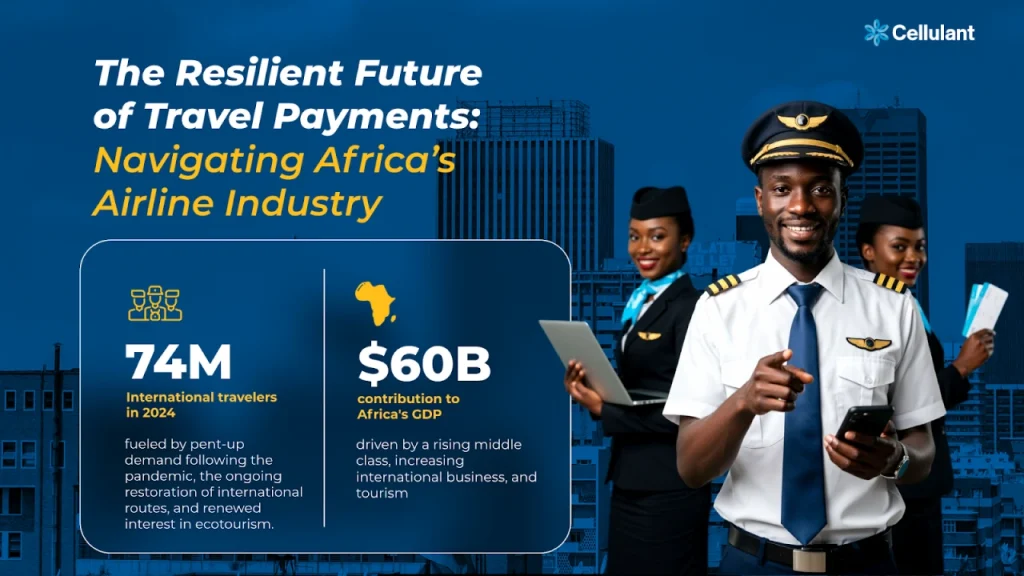
Air transport supports over seven million jobs across Africa, and contributes around $ 60 billion to the continent’s GDP, driven by a rising middle class, increasing international business, and tourism.
The travel industry is particularly vulnerable to instability caused by economic downturns and global political events. In Africa, the sector also faces unique payment processing challenges. Increasingly complex booking systems, payment processing delays, and a fragmented payment landscape undermines the industry’s ability to evolve and offer seamless customer experiences on the continent.
A healthy74 million international travelers visited Africa in 2024, fueled by pent-up demand following the pandemic, the ongoing restoration of international routes, and renewed interest in ecotourism. The African Airlines Association reports that intercontinental traffic made up 37%of the African Airlines passenger distribution in Q3 of 2024, with intra-Africa and domestic passenger traffic making up 31% and 32% respectively.
The potential for sustained growth is there and it is up to the industry to find and embrace solutions to capitalise on this.
Fragmented Infrastructure Hinders Seamless Air Travel
Globally, travellers prefer to make their bookings online, but African passengers prefer to book through travel agents over any other method. The latest IATA Global Passenger Surveyidentifies three areas of improvement: easy and simple payment processes, payment in installments, and payment alternatives.
Airlines operate within a complex ecosystem that provides customers with a variety of booking channels. These include direct options such as websites, apps, call centres, and ticket counters, as well as indirect channels like traditional and online travel agencies, tour operators, flight aggregators, and affiliate networks, including those through loyalty programs.
In Africa, the air transport infrastructure remains fragmented, with different countries using varying ticketing systems, currencies, and payment methods.
To improve efficiency and streamline the ticket sales, payment, and settlement process, the International Air Transport Association (IATA) introduced the Billing and Settlement Plan (BSP). This system acts as a trusted intermediary, enhancing the reliability and efficiency of transactions between airlines and travel agents. While the BSP has addressed many of the industry’s challenges, airlines operating in Africa still face significant issues.
A key challenge is the region’s low banking penetration, with many customers relying on traditional payment methods, which can hinder the customer experience. Asmobile money and digital wallets gain popularity across the continent, their limited integration into air travel payment systems presents growing concerns.
Currency restrictions further complicate international payments for airlines operating in Africa. These regulations often result in delays or failures in remitting payments to international stakeholders, adding to operational costs.
Additionally, rising fraud reports in emerging markets highlight the growing need for airlines to invest in fraud prevention technologies and secure payment gateways to reduce risk and ensure secure transactions.
Fragmented systems and outdated infrastructures shouldn’t limit growth. Africa is ready for resilient, seamless travel payments that match its ambition.
Building Resilience in African Air Travel
Sustainable growth in the airline industry requires resilience in addressing the challenges of payment processing. Airlines must adopt diversified payment strategies that cater to local market preferences and reduce their dependence on a single payment provider.
By offering a wide range of payment options, airlines can improve payment flexibility and appeal to a broader customer base. Alternative payment methods like Buy Now, Pay Later (BNPL), digital wallets, and mobile money present an opportunity to expand payment offerings beyond traditional credit cards and bank payments.
In today’s globalised travel industry, seamless cross-border payments are essential. Airlines must adapt to real-time settlements while maintaining security and regulatory compliance through Anti-Money Laundering (AML) and Know Your Customer (KYC) processes. To ensure this, robust fraud detection systems and risk analysis tools are necessary to prevent fraudulent transactions and meet local regulatory requirements.
Connecting Africa To The World
The resilience of the travel payments ecosystem lies in the unity of stakeholders working towards a common goal: a frictionless, secure, and future-ready payment experience.
“Africa’s aviation market is one of the most promising frontiers for growth, both in domestic and international travel. As connectivity expands and travel demand rises, airlines need partners that understand the region’s complexity,” notes Josephine Wacheke Kinyui , senior sales director- Head of Travel and Hospitality at Cellulant.“Cellulant has strategic global and regional partnerships with entities like Amadeus, Sabre, IATA IFG, AeroCRS and more, allowing for simplified integration into the complex air travel ecosystem.”
Cellulant allows airlines to move beyond the limitations of legacy systems to accommodate the African market’s requirements and unlock new revenue streams, deliver seamless cross-border experiences and strengthen customer trust.
Our technology makes light work of the common challenges facing the industry by providing a single point of access to multiple payment methods with built-in security and fraud detection capabilities. Cellulant’s industry-leading African footprint opens the door to 24 markets and 200+ payment integrations across card, bank, and mobile money.
Combined with the steady growth in passenger numbers, innovation and resilience in payment processing will be key to maximise opportunity for airlines. By adopting diversified payment strategies and ensuring seamless cross-border transactions, airlines can strengthen their operations and offer a better customer experience. Ultimately, it is through these proactive steps that airlines can build resilience and a future-ready payment ecosystem, connecting Africa to the world with greater ease and confidence.