

Access to traditional banking services has historically been very low in Africa, but the rapid growth in communication technology has seen the rapid adoption of mobile money across the continent. Since the launch of M-Pesa in Kenya in 2007, mobile money has revolutionised how people send, receive, and store money, reaching 835 million registered accountsacross Sub-Saharan Africa as of 2023.
Mobile money, which processed over $919 billion in transactions in 2023,has become a cornerstone of African commerce. It drives economic activity at every level, from rural markets to urban enterprises.
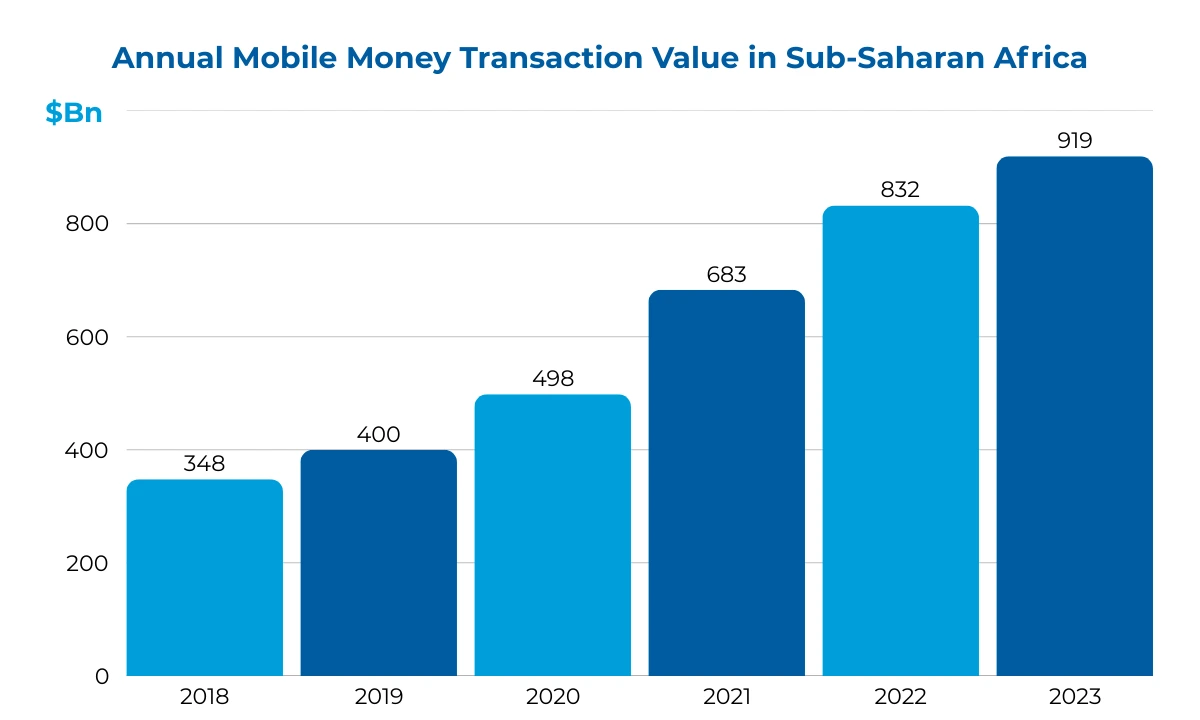
Despite its roots in peer-to-peer transactions and small-scale commerce, mobile money has become a dominant payment method across Africa.
For large-scale and enterprise businesses, ignoring mobile money means overlooking a payment system that is deeply embedded in consumer behaviour and economic infrastructure.
With the rise of fintech solutions that simplify integration, businesses can now access mobile money’s vast potential to drive growth, expand reach, and ensure competitiveness in one of the world’s fastest-growing markets.
The Rise (And Rise) of Mobile Money in Africa
Mobile money’s rise in Africa is one of the most significant financial transformations of the 21st century. It all began in 2007 with the launch of M-Pesa in Kenya, a service that allowed users to send and receive money through simple text messages. Initially designed to facilitate microloans and basic transfers, M-Pesa quickly grew beyond expectations by tapping into the need for accessible financial services in a region with limited traditional banking infrastructure.
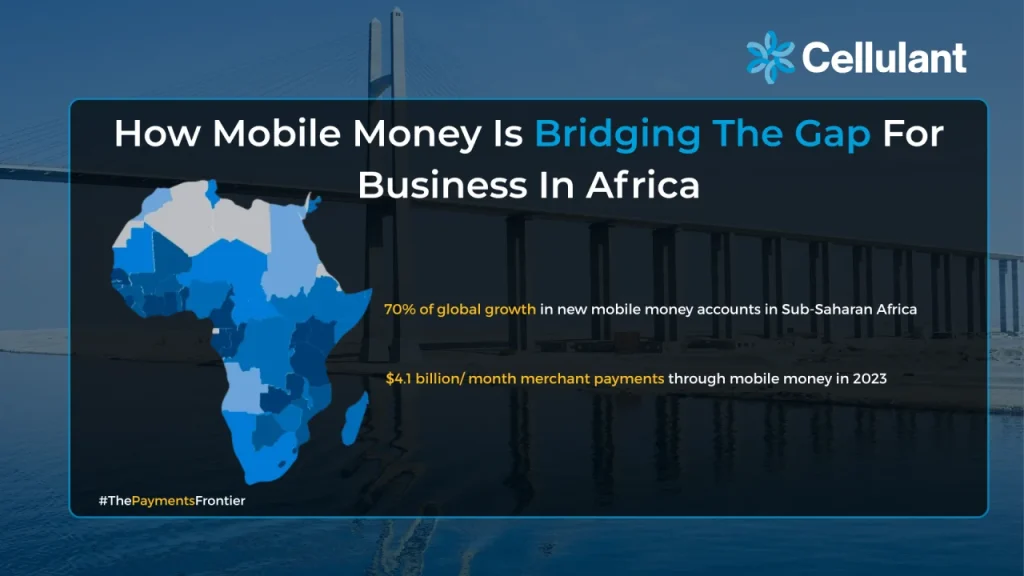
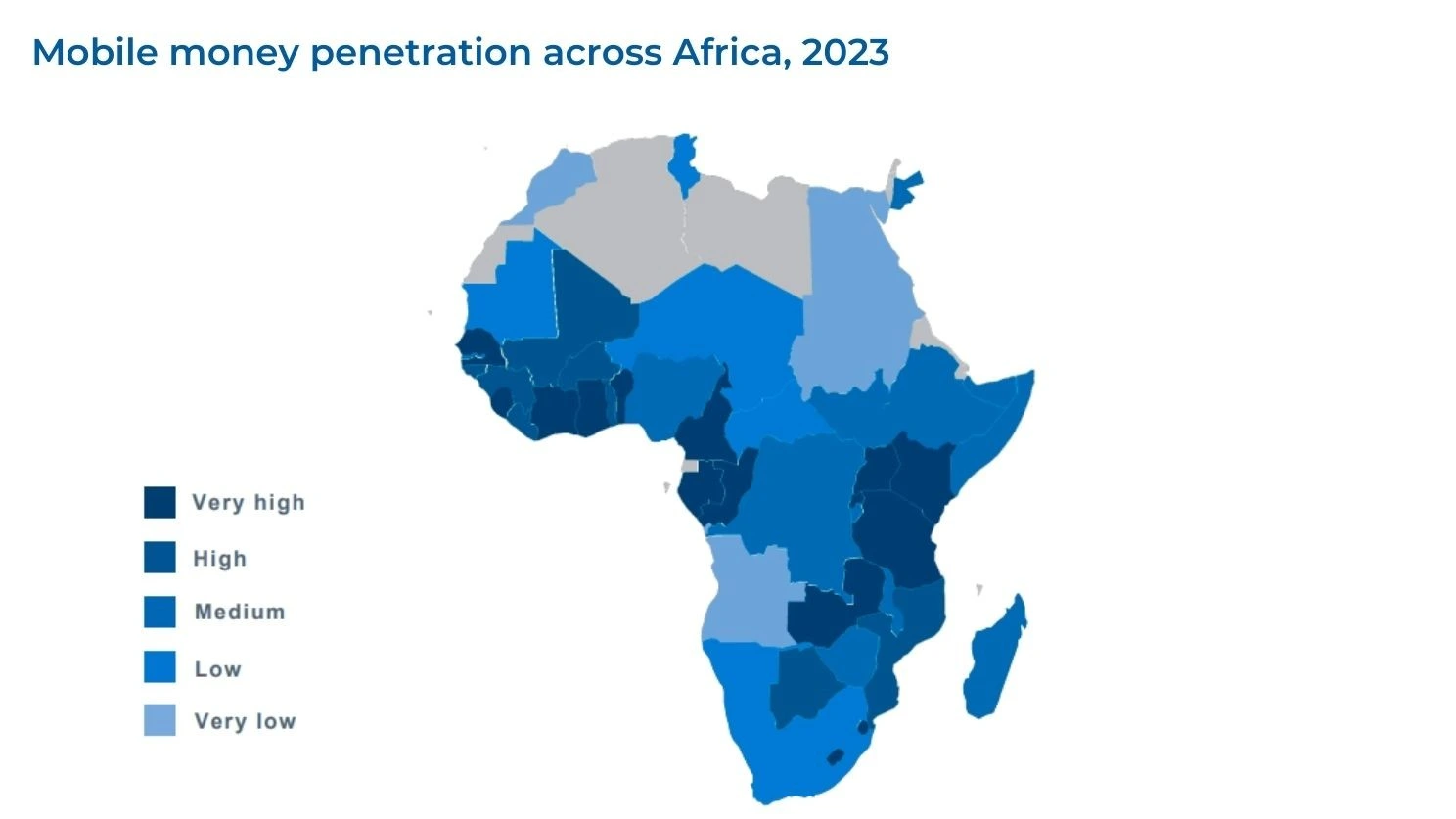
M-Pesa’s success set the stage for the mobile money revolution across the continent. By 2023, Sub-Saharan Africa accounted for 48% of the world’s registered mobile money accounts. The region also drove over 70% of global growth in new accounts that year, demonstrating widespread adoption and sustained momentum.
Why Big Business Should Pay Attention
The rise of mobile money in Africa reflects a deep trust in its platforms over traditional banking systems. Mobile money continues to grow across industries. Its role in financial inclusion has brought millions of previously unbanked individuals into the formal economy, offering an opportunity for market expansion.
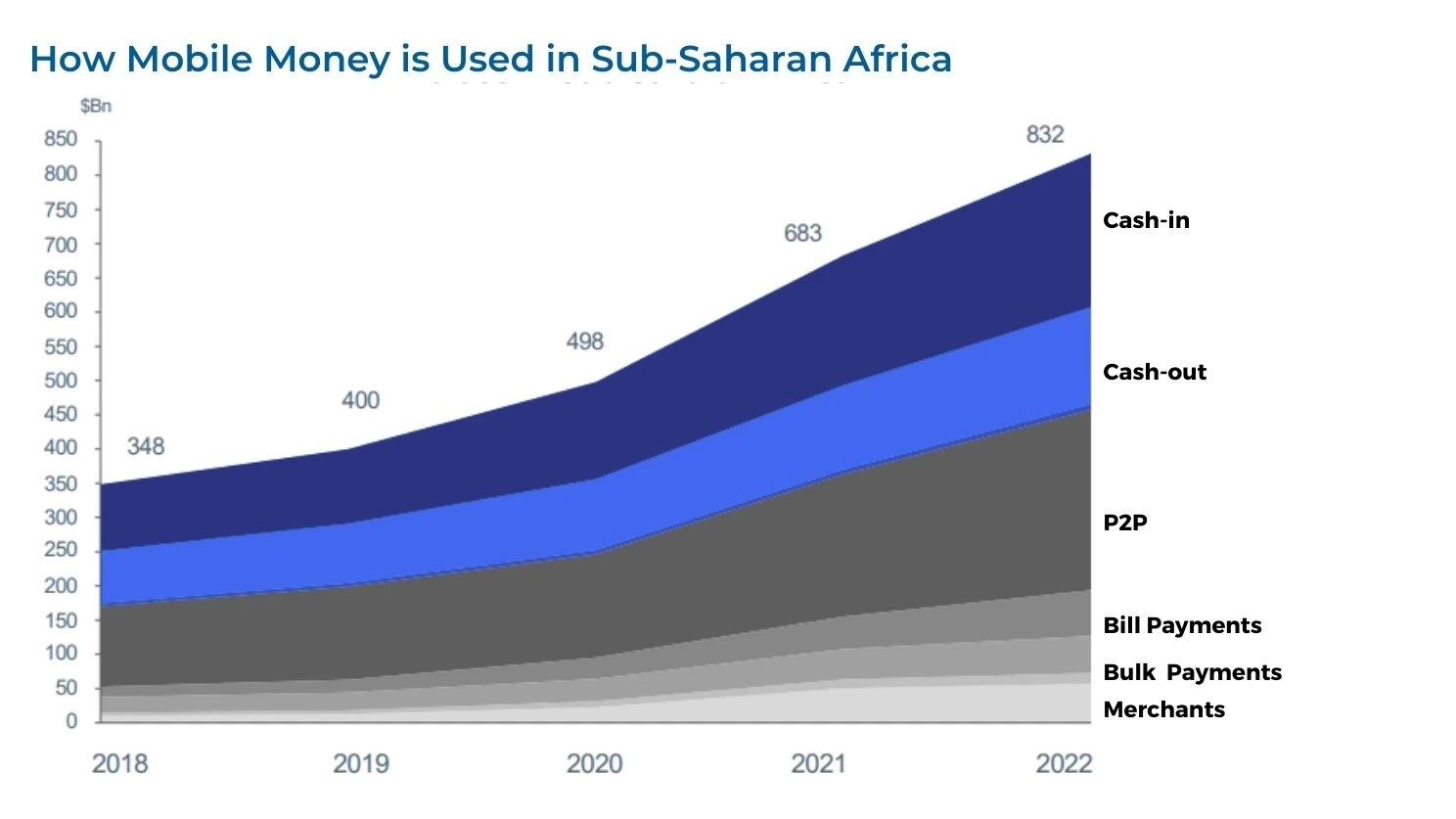
For many years, mobile money was primarily seen as a tool for peer-to-peer (P2P) and other small-scale transactions. The World Bank’s Global Findex 2021 reports that the period following the COVID-19 pandemic has seen a steady increase in its use for merchant, bill, and bulk payments.
Merchant payments through mobile money increased 2.5 times between 2020 and 2022, peaking at $4.7 billion processed monthly in 2022. This trend has plateaued, with only $4.1 billion processed monthly in 2023.
Barriers to Mobile Money Adoption
Integrating mobile money is not without its challenges. The fragmentation of mobile money is a significant challenge, with hundreds of mobile money platforms operating across the continent, often in difficult-to-penetrate silos. For businesses looking to expand into multiple markets, it means dealing with different providers , and payment protocols in each market. This requires businesses to establish multiple partnerships or find third-party aggregators to unify their payment systems, pushing out time-to-market significantly.
Another significant hurdle is the regulatory landscape, which includes varying rules regarding transaction limits, compliance requirements, and licensing. However, steady progress has been made in this regard, driven by concerted efforts by the African Financial Inclusion Policy Initiative (AfPI) and others to harmonise policies and regulatory approaches. In its 2024 State of the Industry Report on Mobile Money, the GSMA reports that licensing, consumer protection and know-your-customer (KYC) regulations have become more enabling for mobile money in recent years.
Integrating mobile money into existing systems such as ERP software, payment gateways, and e-commerce platforms can be technically complex and costly. Without the right security protocols, fraud detection mechanisms, and compliance frameworks, enterprises may face significant financial and reputational risks. These challenges make the initial setup costly and technically demanding, requiring businesses to invest in custom integrations, security infrastructure, and skilled IT personnel.
Fintech Makes Mobile Money Work for Enterprises
The good news is that fintechs serve as a strategic enabler for business success by solving these technical and operational challenges. Mobile money adoption is made easier, safer, more cost-effective, and scalable. Through the right partnerships and technology, businesses can seamlessly incorporate mobile money into their operations.
Cellulant provides a single entry point to its extensive footprint in Africa, including an industry-leading 45+ mobile money operators and wallets across the continent. Cross-border capabilities allow for seamless operations without separate integrations, while multi-wallet support allows for easy consolidation of payments.
Cellulant facilitates faster market entry by offering simplified compliance within legal frameworks and pre-built infrastructure that removes the burden of setting up and maintaining individual integrations. Built-in risk management features ensure every payment is secure and compliant.
This allows businesses to drive growth by expanding their customer base to include millions of mobile money users. With everything from payouts to settlements and reconciliations handled on one platform, businesses can skip the hassle of juggling multiple systems and focus on running operations more efficiently.
The Next Chapter for Mobile Money
. Adapting to mobile money is necessary for businesses targeting growth in an increasingly digital economy. While there are multiple serious barriers to mobile money adoption, fintech providers such as Cellulant are rapidly solving these challenges. They are making mobile money more accessible, secure, and scalable for large businesses, allowing them to expand their market reach and tap into new revenue streams.
The success of mobile money and continued internet penetration are now driving the demand for other underdeveloped financial services, especially across borders. These include but are not limited to credit services, cross-border payments, investment products, and insurance services. Cellulant and other fintech innovators will be at the forefront of unlocking these untapped opportunities for savvy businesses looking to expand into Africa.