

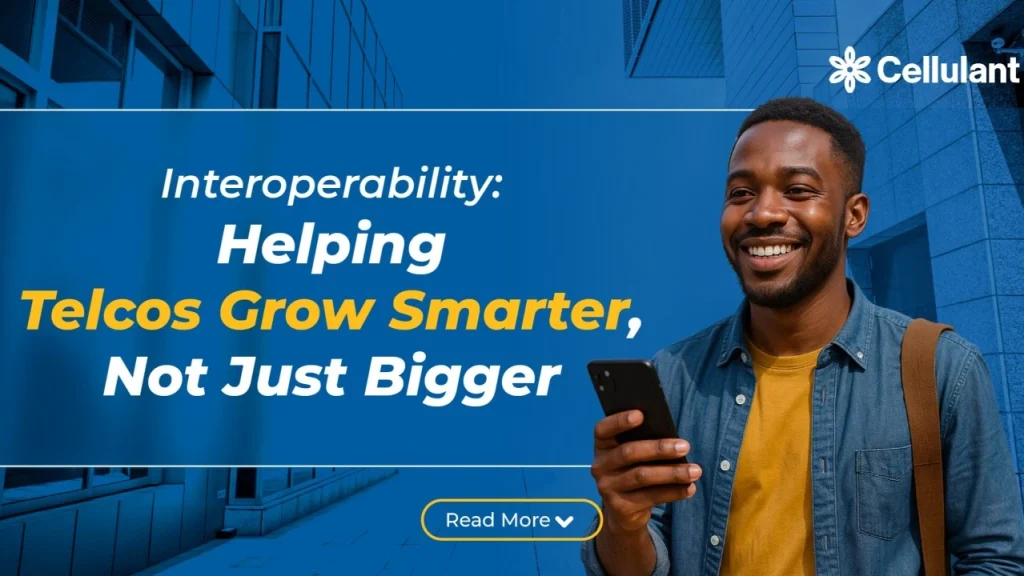
Meet Kevin, a freelance graphic designer based in Nairobi. He uses mobile money to collect payment, pay his rent, send airtime to his younger brother, and buy groceries through a local delivery app. Although he has a successful career, moving funds is a frustrating endeavour: his clients use different mobile wallets, as does his landlord and the delivery app. Kevin needs to juggle multiple SIM cards, wallet balances, and a constant stream of manual transfers to manage his finances.
Kevin’s story isn’t unique. As more people transact, work, and live online, fragmented mobile money ecosystems create unnecessary frictions, not just for the underserved, but also for professionals, businesses, and service providers.
In Africa’s mobile money landscape, profitability has long been tied to exclusivity: If you own the wallet, you own the customer. While this model may offer control, maximise user lock-in, and protect market share, customer demands and regulatory requirements are forcing Telcos to rethink this approach.
By enabling users to send money across networks, telcos can unlock new revenue streams, reduce infrastructure costs, and enhance user engagement. Embracing mobile wallet interoperability will enable telcos to not only grow bigger but also to grow smarter.
Strategic growth through interoperability
Allowing users to move mobile money freely not only reduces their friction, but also offers commercial opportunities for MNOs:
- Platform interoperability increases total transaction volume.
- Agent networks can be shared, reducing capital and operational expenses, especially in rural markets.
- Consumers are more likely to use higher-margin services like merchant payments, bill pay, and digital services if they can transact across multiple platforms.
- Deeper ecosystem integration creates revenue opportunities through fintech and bank partnerships, creating new commercial layers beyond core mobile money.
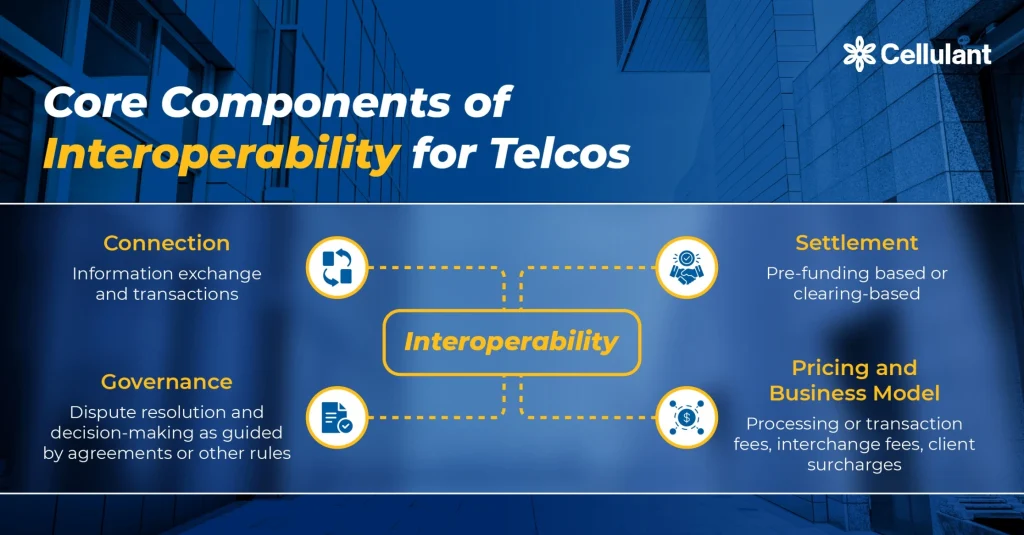
While technical aspects like connection and settlements are a core focus of interoperability, other core components are of equal importance:
Between 2010 and 2020, research on over 120 African mobile money companies revealed that interoperability lowered fees for clients but also led to reduced infrastructure investment, particularly in rural areas. While more affordable mobile money can improve financial inclusion, interoperability should be seen as an enabler of mobile money adoption rather than a starting point. Timing matters, and introducing interoperability through regulation before the market has matured may slow down innovation.
Countries with industry-led interoperability already had high levels of mobile money adoption that continued to grow after implementation. Interoperability has the biggest impact when there is established trust among customers who already want to use the system but demand fewer obstacles in accessing their funds.
The real-life impact of interoperability
A major Kenyan telco has seen a 2% growth in its market share between September 2024 and March 2025 by partnering with Cellulant to realise the opportunity offered by interoperability. By integrating Cellulant’s wallet-agnostic Checkout solution into their USSD, App, and web platforms, we helped unlock access for users like Kevin, even if their money is stored in a different wallet.
No more switching SIMS and juggling wallet balances, leaving him with more time to focus on growing his business.
Behind the scenes, Cellulant deployed a dedicated system environment that can handle the client’s high volume of lower-value transactions without compromising performance and customer experience. Overall, customer experience and trust improved, driven by the improved reliability of the dedicated system environment.
As Africa’s economy grows, so do expectations. People like Kevin demand more than access; they want the freedom to access their money no matter where it’s kept. Current trends show the popularity of P2P payments and growth in interoperability, regardless of whether it’s driven by industry or government regulation. The next frontiers will be interoperability in merchant payments and agent networks, and innovations like Cellulant’s Checkout can position telcos in Africa to make the most of these opportunities.