

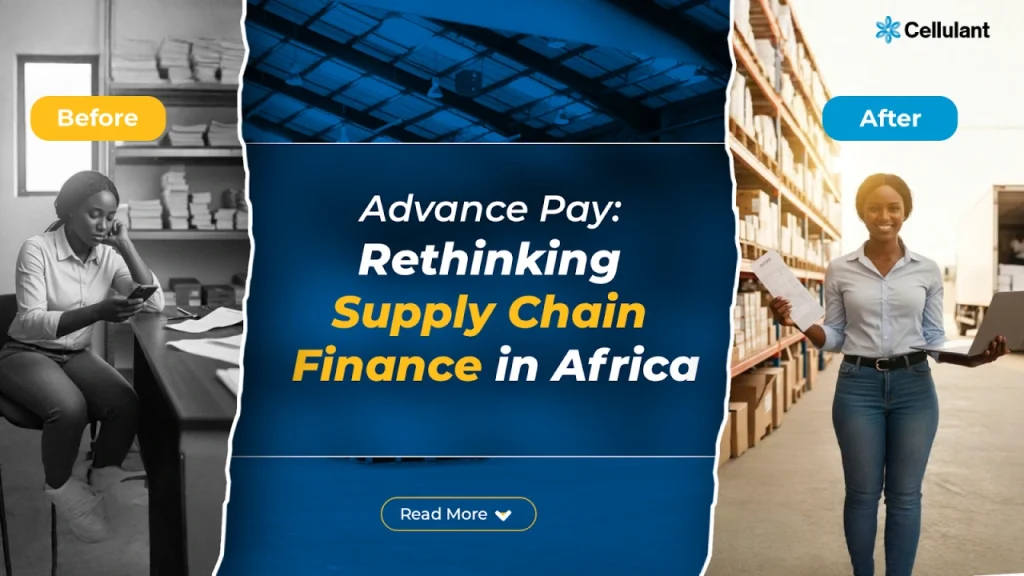
Jane runs a growing agro-supply business in Kenya. She prides herself on delivering every order to her client, a large national buyer, on time. Her invoices are approved swiftly, yet she needs to wait 60 to 90 days for her payment. While she waits, she struggles to restock, honour payroll, and fulfil new orders.
Across Africa, millions of businesses like Jane’s are caught in this liquidity trap, not because they’re inefficient, but because the financial infrastructure around them hasn’t kept up.
But Jane’s challenges don’t stop with her; they ripple up the chain. Her buyer risks stockouts and delayed deliveries, and lost revenue when its suppliers can’t deliver.
Why Traditional Supply Chain Finance Falls Short
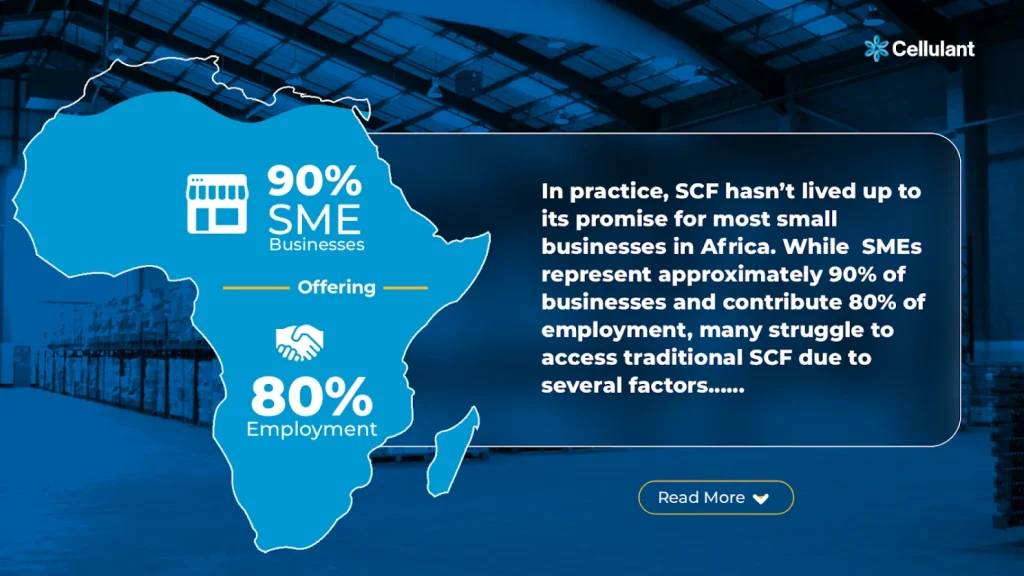
Supply chain finance (SCF) has emerged as a way to optimise cash flow between buyers and suppliers, with year-on-year growth in both volume and funds in use (FIU) continuing at a steady pace in Africa. On paper, it’s a win-win: Suppliers get paid and buyers preserve working capital. Traditionally, banks facilitated this through invoice discounting, letters of credit, and reverse factoring. In practice, SCF hasn’t lived up to its promise for most small businesses in Africa. While SMEs represent approximately 90% of businesses and contribute 80% of employment, many struggle to access traditional SCF due to several factors:
- Limited Access: Most SCF programs favour top-tier suppliers, excluding the vast majority of businesses on the continent.
- Onboarding Hurdles: Many small businesses cannot meet the demands for extensive documentation, formal registration, and digital infrastructure.
- Slow Processes: Traditional SCF is bank-led, paper-heavy, and manual. Approval often takes weeks, defeating the purpose of ‘fast’ finance for SMEs.
- Low Bank Penetration: Traditional bank penetration on the continent is low and, subsequently, not accessible to SMEs who might not trust the system or fear hidden costs.
As a result, many African SMEs operate in a persistent state of liquidity stress. These businesses are delivering value every day but lack the cash flow to grow, hire, or fulfil larger orders.
The Ripple Effect on Buyers
Supply chain strength is only as strong as supplier liquidity. Delayed payments don’t just hurt the supplier; they create operational and financial risk for the buyer, too. Beyond disrupted production cycles, trusted suppliers may exit the relationship and buyer growth may stall because SME partners can’t scale. Quality may suffer as SMEs try to stretch limited resources, and the buyer’s reputational risk grows.
Reimagining SCF
Traditional SCF solutions don’t align with African SME operational realities.
It’s clear that traditional SCF is imposing solutions that are impractical to African SMEs because they do not align with their operational realities. Pioneering solutions like Tingg Advance Pay, created through collaboration between Cellulant and Visa,
Tingg Advance Pay enables corporate buyers to pay suppliers instantly by using their Visa commercial credit cards. Funds are transferred directly into a supplier’s bank account or mobile wallet -often within minutes. This solution doesn’t require any heavy IT lift or multiple bank integrations. Instead, it leverages Visa’s secure payment rails and Cellulant’s regional infrastructure to plug directly into existing payment workflows.
Suppliers like Jane can get near-immediate access to cash with no need for collateral, a credit history, complex loan applications or hidden charges. Buyers leveraging Tingg Advance Pay get stronger supplier relationships, smoother inventory flows, improved working capital through card settlement cycles, and full visibility with digital audit trails across transactions.
Bridging The Multi-billion SCF Gap In Africa
Tingg Advance Pay can be white-labeled, allowing banks to leverage the technology while providing a seamless branded experience. Recently, Citibank introduced Citi Optimised Pay, a groundbreaking SCF solution powered by Tingg Advanced Pay, aimed at bridging the KES 2.2 trillion ($15 billion) supply chain finance gap in Kenya.
The most recent estimate by the African Development Bank pegged the continent’s trade deficit at US$ 91 billion. Bridging this gap requires a shift in perspective: Supply chain finance shouldn’t be reserved for large corporations with pristine balance sheets. A more inclusive supply chain ecosystem benefits both buyers and suppliers equally. Solutions like Tingg Advance Pay unlock opportunities for every player in the supply chain.