


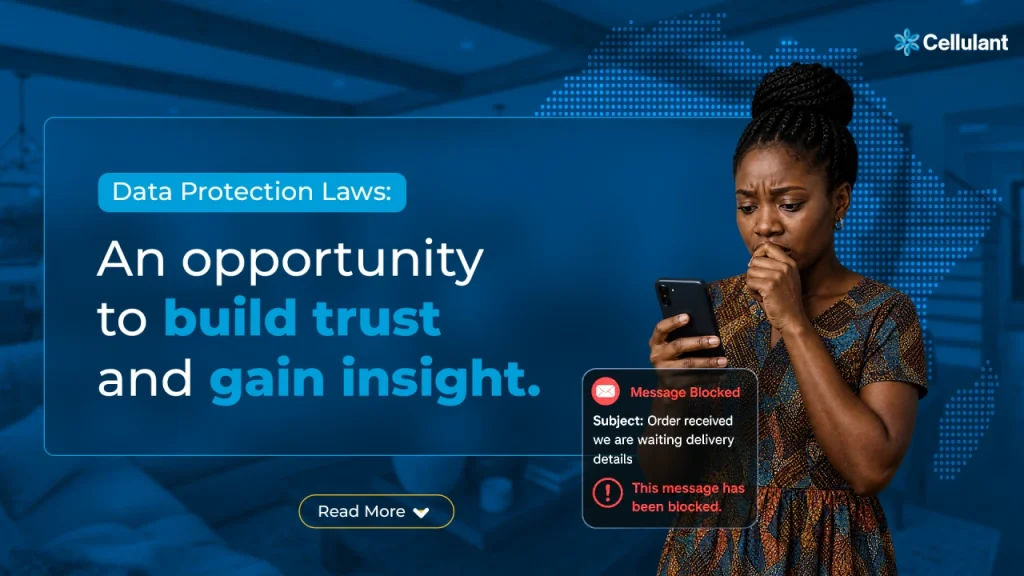
In payments, trust is infrastructure. It’s what makes a customer complete a transaction instead of abandoning it, open a fraud alert instead of ignoring it, come back instead of leaving. Most merchants think about trust in terms of their product or their price. Few think about what happens to trust every time they send a message their customer didn’t ask for.
Amara buys a new phone on backorder from an online store in Nairobi. She creates an account, pays, and within days she’s flooded with promotional messages she never signed up for: flash sales, partner deals, and accessory bundles for products she doesn’t own. She opts out, but is still flooded with messages. She starts ignoring everything from that sender entirely.
She misses the message that her new phone has arrived but that her delivery address couldn’t be confirmed. The order gets cancelled. Now there’s a refund request, a support call, and a customer who won’t be back. The merchant didn’t lose her when she opted out. They lost her when they ignored her request not to be spammed.
As a payments processor, we see this play out more than you’d expect. The moment a customer decides a sender’s messages aren’t worth opening, the transactional messages that underpin the entire payment relationship stop getting through too. The infrastructure of trust that payments depend on gets buried under noise the merchant created.
Across Africa, data protection frameworks are tightening, enforcement is accelerating, and the rules around how merchants communicate with customers are getting clearer and more consequential. Will compliance be another checkbox exercise, or is there an opportunity for strategic advantage along with regulatory compliance?
Africa’s Data Protection Moment Is Here
Currently, 46 of Africa’s 55 countries have enacted data protection laws, and some are increasingly issuing fines for non-compliance. For merchants, these frameworks don’t just govern how customer data is stored. They govern how it’s used, including whether you can send a promotional message to someone who gave you their number to complete a purchase.
For example, Nigeria’s Data Protection Act requires explicit consent before marketing communications and immediate cessation when a customer withdraws it. In Kenya, regulations require that opt-out mechanisms be simple, free, and effortless. Across the continent, many regulators require a hard line between promotional messaging and transactional ones: Amara should still receive communication about her order even if she opted out of promotional messaging.
What opt-outs are actually telling you
Merchants should see the regulations as an opportunity rather than just another checkbox exercise. A consented customer, one who has actively said yes to hearing from you, is a fundamentally different prospect to someone who simply hasn’t opted out yet. They are more likely to open, more likely to act, and more likely to stay. If customers trust your transactional messages enough to open them, that trust rubs off on everything else you send. A consented marketing message arriving in the same channel carries more weight than any unsolicited one ever could.
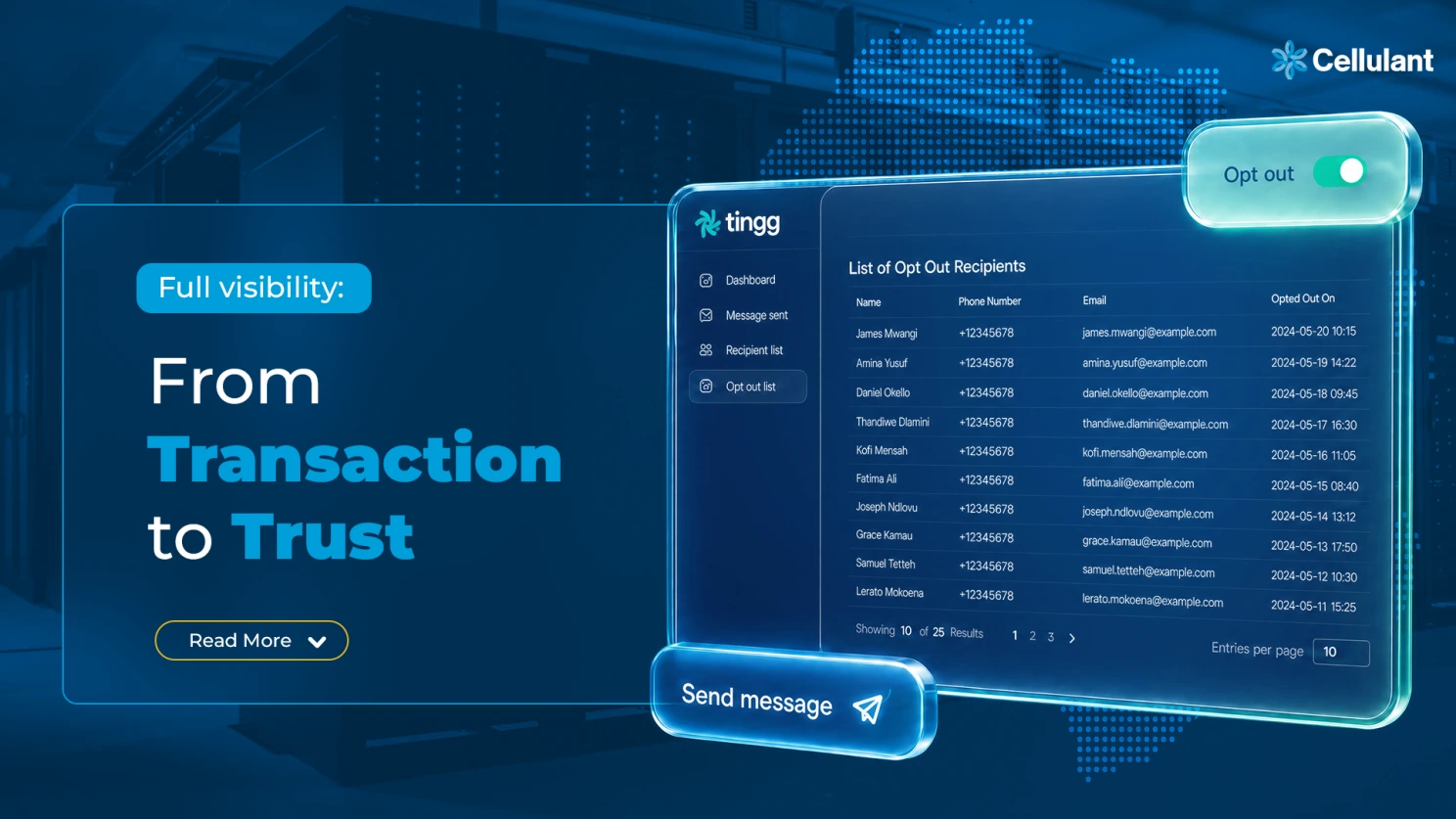
Opt-outs also offer a valuable data point. Merchants who can see opt-out data alongside their transaction and communications history have a strategic asset, a complete view of the customer relationship. Where is it healthy, where’s it fraying, and where it broke down entirely. This visibility doesn’t just help you communicate better, it helps you understand your business better.
Full visibility: From transaction to trust
In payments, every transaction is an act of trust. Opt-out data is one of the clearest signals that you’re losing trust, and ultimately potential sales.
That visibility, though, depends entirely on where the opt-out happens. There’s a meaningful difference between a customer who opts out through your platform, and one who simply blocks your number. The latter happens silently: the data sits with the mobile network operator and you’re left with no record, no reason, and no way to know how many customers made the same decision.
That’s why we’ve introduced opt-out management to our Tingg Engage platform, not only as a compliance tool, but as part of the same infrastructure that gives merchants visibility across their transactions and communications in one place. Tingg Engage goes beyond notifications to deliver communications at every customer touch point, and its Do Not Disturb eliminates guesswork about opt-outs while maintaining compliance with communication regulations.